

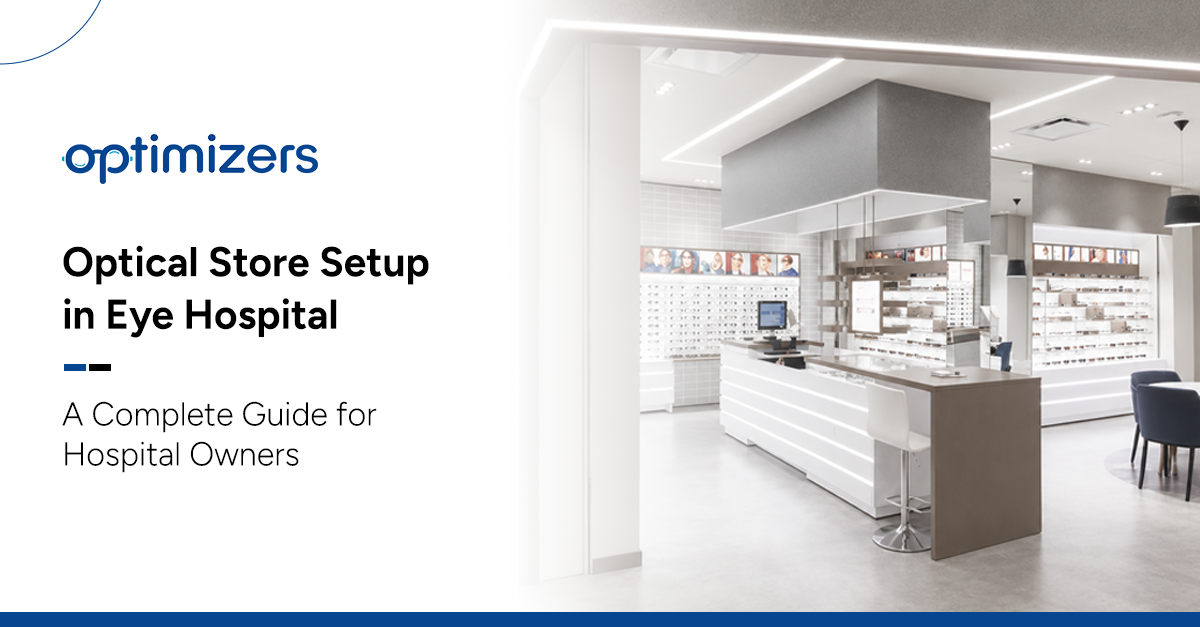
Most people who walk out of an eye hospital carry a prescription with them, and a fair number of them will need frames or lenses sooner rather than later. For hospital owners, this is one of the more natural extensions of the care they already offer. An optical store setup in eye hospital premises means patients do not have to step out, hunt for a shop, and hope the person behind the counter understands their prescription the way the hospital’s own team would. It keeps the whole experience in one place, under one roof, with people the patient has already come to trust.
Why It Makes Sense to Have an Optical Store on Site
There is something to be said for continuity. A patient who has just finished a consultation is far more likely to complete the next step, buying spectacles or getting lenses fitted, if it can happen right there, without another appointment or another drive across town. Hospitals that have built this into their premises often find that patients simply expect it now, the same way they expect a pharmacy nearby.
It also helps that the hospital’s own standards carry over. When the same team, or a closely managed partner, handles both the medical and the retail side, patients do not have to wonder whether the quality will hold up once they leave the consultation room.
What to Think Through Before You Set One Up
Space and layout- The store needs a spot that patients will actually notice, somewhere near billing or the consultation area works well. Beyond visibility, give some thought to how people move through the space. A cramped display wall does nobody any favours, and a proper seating area for fittings matters more than most owners expect going in.
What you stock- Frames and lenses should cover a reasonable spread, not just budget options, not just premium ones. Patients arrive with very different expectations, and a store that only serves one end of that range will send people elsewhere for the other.
Who runs the counter- This part gets overlooked more often than it should. A patient deciding between frame styles or lens coatings benefits enormously from staff who actually know what they are talking about, both technically and in terms of what suits a face or a prescription.
How it connects with the hospital- Prescriptions, billing, inventory, all of it works better when the optical store is not operating as a separate island. When records move smoothly from the consultation room to the dispensing counter, patients notice the difference, even if they cannot quite say why the visit felt easier.
Where Optical Management Services Fit In
Running an optical store is not the same job as running a hospital, and most hospital owners did not get into this field to manage frame inventory or negotiate with lens suppliers. That is really the gap that optical management services are built to close. These services typically take on the operational load, staff training, vendor relationships, layout planning, day to day running, so that the store functions well without pulling attention away from patient care.
For an owner who would rather stay focused on the medical side of the business, handing over some or all of the optical store’s operations to an experienced partner tends to be the more practical route. It means the store gets set up properly the first time, and it keeps running that way.
A Rough Path to Setting One Up
Look at how many patients come through and what they tend to need, this shapes everything else.
Pick a location inside the hospital that people will naturally pass or notice.
Plan the layout with actual patient movement in mind, not just what looks good on paper.
Find suppliers you can rely on for frames and lenses.
Bring in staff who know the product and can talk patients through their options.
Link the store’s systems, billing and prescriptions especially, with the hospital’s own records.
Revisit the setup every so often. What works in year one may need adjusting by year three.
The Bottom Line
Setting up an optical store inside an eye hospital is less about adding a retail counter and more about finishing a journey the patient has already started. Get the planning right, lean on proper optical management services where it makes sense, and the store stops feeling like a bolt-on and starts feeling like part of the visit.
FAQs
Do patients actually prefer getting their eyewear from the hospital itself, or do they usually shop around?
Many prefer the hospital option simply because it saves a trip, but preference does vary. Some patients like comparing options elsewhere first. Having a good in-house store just means the hospital option is there when they want it, not that it forces a choice.
What is the ideal size for an optical store inside a hospital?
There is no fixed number here. It really comes down to how many patients the hospital sees and how much variety you want to offer. Smaller hospitals often manage well with a compact counter setup, while larger ones benefit from a proper standalone space.
Can hospital staff who already work in reception or billing also handle the optical store?
It is possible, but not ideal. Dispensing eyewear well takes a specific kind of product knowledge, and stretching existing staff too thin usually shows in how patients experience the store.
What exactly do optical management services cover, in practical terms?
It usually includes the operational side, so inventory, vendor coordination, staff training, layout, and ongoing support. Think of it as someone else handling the retail machinery so the hospital does not have to build that expertise from scratch.
Is it worth converting part of an existing space in the hospital into an optical store?
Yes, it can work as a starting point, but most hospitals eventually find that a dedicated space serves patients better. Shared spaces tend to feel rushed, and eyewear selection is not something people like doing in a hurry.
How long does it typically take to get an optical store up and running inside a hospital?
It depends on the scale, but between planning the layout, sourcing suppliers, and training staff, most setups take a few months from decision to opening day.