

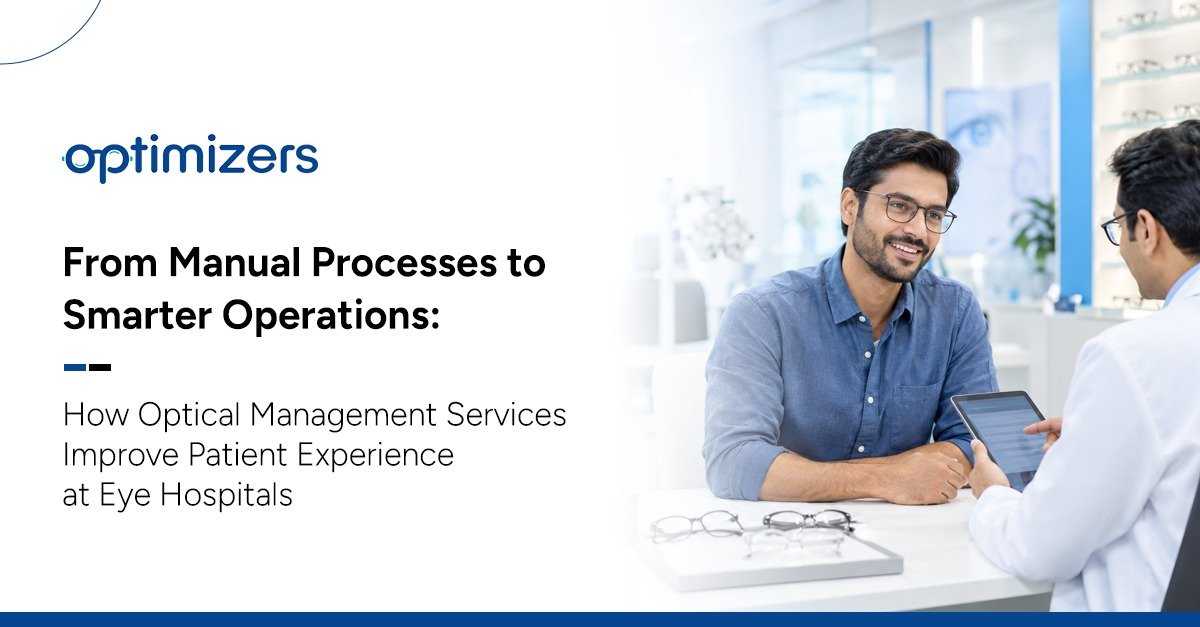
Walk into the optical counter of a busy eye hospital at eleven in the morning and the whole picture is in front of you. A patient holds a prescription slip, a staff member flips through a paper register, and a phone rings about a frame that has not arrived. Nobody is at fault. This is simply what happens when a counter grows faster than the way it is run. This is where optical management services make a real difference. They bring order to the stretch between the consulting room and the finished pair of glasses, and that order shapes how patients remember their visit.
Where Manual Processes Slow the Counter Down
Handwritten prescriptions, stock counted by eye and orders noted in diaries all work, until the day volume rises. A misread digit in the axis or a frame logged against the wrong patient is easy to make and slow to catch, and the patient usually finds out only when the glasses feel wrong. Waiting is the other cost. A patient who has just come out of the consulting room, perhaps with dilated pupils or an elderly parent in tow, has to repeat details at the counter while staff search for stock. Even a ten minute delay feels long at that moment.
What Optical Management Services Cover
In simple terms, optical management services cover the daily running of a hospital’s optical store. That includes trained dispensing staff, a thoughtful range of frames and lenses, supplier coordination, inventory control, quality checks and billing, so the hospital’s clinical team can stay focused on eye care. The real value lies in consistency. Every prescription is verified the same way, every measurement is taken the same way, and every order is followed through to delivery. Patients rarely notice a good process, but they always notice a missing one.
How an Optical Management System Supports Smarter Operations
An optical management system is the digital layer beneath the counter. Prescriptions travel from the clinic record to the dispenser, so patients are not asked to repeat themselves, while stock levels and order status stay visible to everyone who needs them. Staff benefit as well. Less manual entry means fewer slips, reminders prompt timely collection, and a returning patient’s history appears in seconds. Over time, the data also shows which lens types are in demand, which helps the hospital plan better.
There is a practical benefit too. A partner that manages many stores brings purchasing experience, tested processes and trained dispensing staff. The hospital draws on that experience from the first month, rather than building it slowly from scratch. Costs also become easier to predict, because the partner carries the stock planning and the staffing.
The Patient Experience, Step by Step
Picture the improved journey. A patient leaves the consultation and is guided to the counter, where the dispenser already has the prescription. Options are explained in plain language, choices match the patient’s budget and daily routine, and the delivery date given is one that holds. The care continues after the sale. A message arrives when the glasses are ready, adjustments are simple to arrange, and someone checks that the fit feels right. This matters most for children, for first time progressive lens wearers and for older patients who need a little more time.
Keeping Doctors and Dispensers Aligned
A well run optical store also strengthens the link between doctors and dispensers. When ophthalmologists know that prescriptions will be read accurately and fitted properly, they can trust the counter as an extension of their own care. Regular training, clear handover steps and shared records keep everyone aligned. Dispensers understand the clinical reason behind a prescription, and doctors receive feedback if a patient struggles with adaptation.
Clarity in the agreement comes next. Scope, reporting, quality standards, revenue terms, and exit provisions should all be written down plainly. Regular review meetings and transparent sales data help both sides stay aligned, and they keep the partnership steady over the years.
What Hospitals Gain Beyond Patient Satisfaction
Smoother operations reduce remakes and wastage, make stock more predictable and free staff from repetitive paperwork. These are quiet gains, yet they add up across hundreds of dispensing visits each month. There is a softer benefit too. A patient who has a calm, clear experience at the optical counter tends to remember the hospital as a whole in the same light. Care feels complete when the glasses fit well and the process behind them feels effortless.
Conclusion
Moving from manual processes to smarter operations is less about technology and more about attention to the patient’s time and comfort. When prescriptions, stock and follow-up are handled with care, the optical counter becomes a natural, reassuring end to the clinical visit. With dependable optical management services and a well-run optical management system working together, eye hospitals can offer patients clarity from the first consultation to the final fitting.
FAQs
What are optical management services?
The structured running of a hospital’s optical store, covering staffing, dispensing, inventory, quality checks and billing, so patients get consistent service after their consultation.
How do optical management services improve patient experience?
They reduce waiting, avoid repeated questions and ensure accurate dispensing, making the path from prescription to glasses clearer and more comfortable.
What is an optical management system?
A software layer linking prescriptions, inventory, orders and billing, giving staff one reliable view of each patient’s requirements and order status.
Does an optical management system replace dispensing staff?
No. It handles records and tracking so trained dispensers can focus on guiding patients on frames, lenses and fit.
Which patients benefit most from a structured optical process?
Older adults, children and first-time progressive lens wearers, who need clearer explanations, careful fitting and follow-up.
How can a hospital tell if its optical counter needs better processes?
Frequent remakes, long waits, repeated data entry and uncertain stock are common signs.