

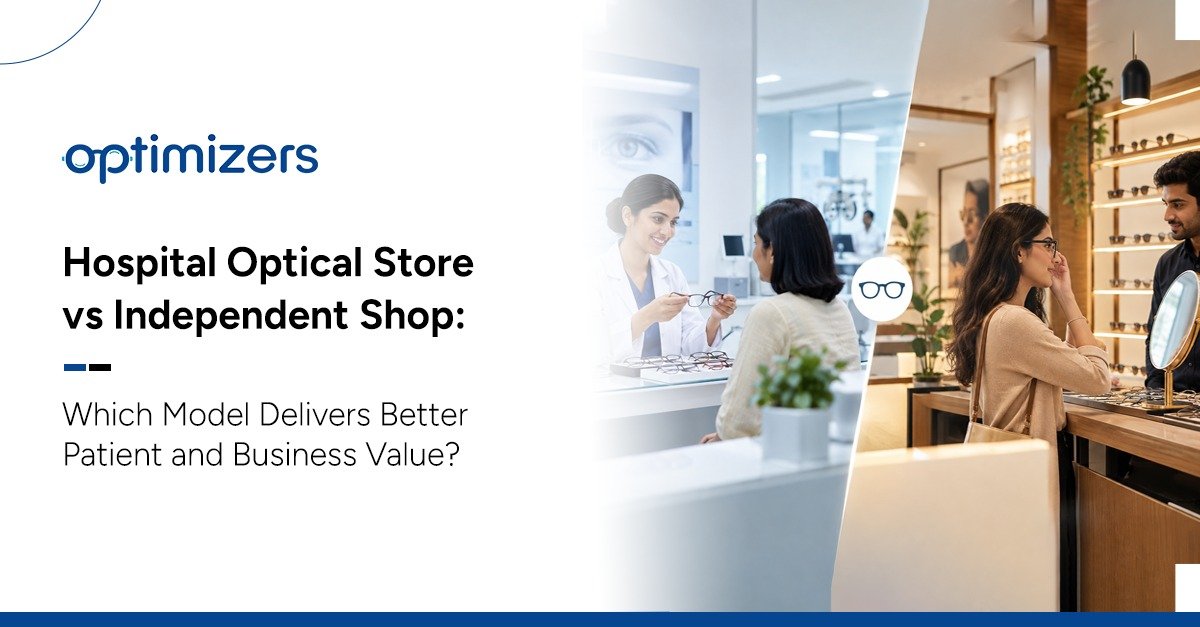
A prescription is only half the story. What happens in the ten minutes after an eye consultation decides whether a patient leaves with clear vision or with a list of things still to sort out. For hospitals thinking about where those glasses should be made and fitted, the options usually narrow to two: partnering with an optical dispensing company, or leaving patients to visit an independent shop of their choice. This piece looks at the optical dispensing company vs independent optical shop question from both sides, covering what each gives the patient and what each means for the business.
What an Independent Optical Shop Offers
Independent shops are woven into their neighbourhoods. The owner often knows regular customers by name, remembers whose frames kept slipping, and adjusts a fit without being asked twice. Buying is local, so stock reflects what the community tends to ask for. Many families return to the same shop for years, and that continuity is a real strength. Decisions are quick too, since there is no committee between the owner and a new frame range.
What an Optical Dispensing Company Brings to a Hospital
An optical dispensing company runs the optical store as part of the hospital’s patient journey. Qualified dispensing staff, set fitting procedures, stock planning and lab coordination work as one system rather than as separate tasks. The store sits close to the consulting rooms, so a patient walks from the doctor’s chair to the dispensing counter in a few steps. The optician can confirm a doubtful prescription detail with the clinical team the same day, which shortens the gap between diagnosis and a finished pair of glasses.
Patient Value Compared
Patients tend to judge an eyewear experience on a handful of simple points.
Patient need | Hospital optical store | Independent optical shop |
Convenience | Prescription and glasses in one visit | Separate trip, often closer to home |
Prescription clarity | Direct line to the treating team | Works from the written prescription |
Follow-up | Adjustments and checks on the same campus | Handled by the shop owner, usually quickly |
Range of choice | Curated, quality-checked range | Varies by shop and owner |
Neither column wins every row. The better fit depends on what the patient values most on the day.
Business Value for the Hospital
For a hospital, an optical store is more than a retail corner. When run through an optical dispensing company, it becomes a steady part of patient care, with trained staff, predictable inventory and reporting that the administration can follow. Patients who complete their whole eye-care journey in one place are likelier to return for annual check-ups, which supports long-term relationships. The clinical team, meanwhile, stays focused on treatment while dispensing is handled by people trained for it.
An independent shop carries its own business strengths. Overheads are lean, the owner can change course quickly, and local goodwill built over years brings steady footfall. Hospitals that work well with nearby independent shops often rely on exactly that goodwill to serve patients who prefer to buy close to home.
Choosing the Right Model
The right answer depends on the hospital’s size, patient volume and goals. A multi-speciality hospital with a busy eye department usually gains from a structured in-house model, because the volume justifies dedicated staff and planned stock. A smaller clinic in a tight-knit locality may find that an established independent shop already serves its patients well. Some hospitals use both: an on-campus store for convenience, and open referral to local shops for patients who prefer them.
A few questions help settle it:
How many prescriptions does the eye department issue each week?
Do patients ask for same-day glasses?
Is there space and a team available to run a store well?
How important is a single, joined-up patient experience?
Conclusion
Choosing between an optical dispensing company vs independent optical shop is less about picking a winner and more about matching a model to the people it serves. Independent shops bring familiarity and local trust, while a hospital-based store brings continuity from the consultation room to the finished pair of glasses. Hospitals that want to offer that joined-up experience can explore optical dispensing solutions that bring staffing, stock and fitting together in one organised process, so every patient leaves with glasses they are comfortable wearing.
FAQs
What is an optical dispensing company?
It is a team that manages the dispensing side of an optical store, including frame selection help, lens recommendations, measurements, fitting and delivery of the finished glasses, usually working within a hospital.
How does a hospital optical store differ from an independent optical shop?
A hospital store sits within the care pathway, so prescriptions pass quickly from the doctor to the dispensing counter. An independent shop operates on its own, serving the wider neighbourhood.
Does a hospital optical store limit patient choice?
No. Patients remain free to take their prescription anywhere. The on-campus store simply offers a convenient option for those who want everything done in one visit.
Are independent optical shops still relevant?
Yes. Their personal service, local knowledge and long customer relationships keep them valued, especially among families who prefer a familiar face.
What should a hospital consider before setting up an optical store?
Patient footfall, available space, trained staff, inventory planning, and how the store will fit into the eye department’s daily workflow.
How do optical dispensing solutions help hospitals?
Optical dispensing solutions cover staffing, stock, lab coordination and fitting standards, so the store runs consistently and patients receive the same quality of service every visit.