

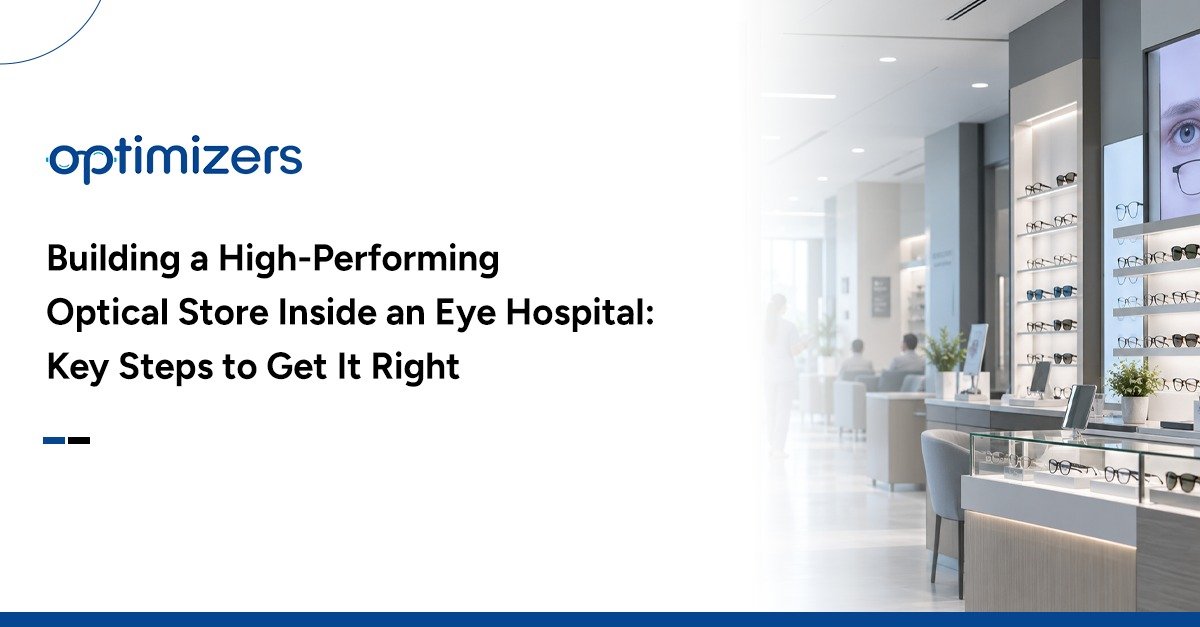
Eye hospitals see a steady stream of patients who need glasses, contact lenses, or post-surgical eyewear, yet many facilities still treat the optical counter as an afterthought. That gap is worth closing. A well-planned optical store inside a hospital does more than sell frames; it closes the loop between diagnosis and treatment, giving patients a reason to trust the same institution for their complete eye care journey.
Getting an optical store setup in eye hospital premises right takes more than placing a display case near the exit. It requires thinking through patient flow, staffing, product selection, and technology together, rather than bolting them on one at a time, and each of these pieces affects how patients experience the hospital as a whole.
Why Optical Stores Matter Inside Eye Hospitals
When a patient walks out of an ophthalmologist’s consultation with a fresh prescription, that moment is the natural point to offer eyewear. If the hospital doesn’t have a store ready to serve them, the patient simply goes elsewhere, and the hospital loses a chance to be part of the full care cycle.
An in-house optical store keeps that relationship intact and gives doctors a dependable partner for prescription fulfillment, low-vision aids, and specialty lenses that regular opticians may not stock. Over time, this also builds a habit among patients of returning to the same hospital for routine eye checkups, since their eyewear and their clinical history live in one place.
Understanding Patient Flow Before You Design Anything
Before choosing furniture or vendors, hospitals need to map how patients actually move through the building. Where does the consultation end? Is there a natural path toward the optical counter, or does a patient have to backtrack through a crowded waiting area? Hospitals that study this flow tend to place the store within easy sight of the exit route from the ophthalmology OPD, so the transition from clinical visit to eyewear selection feels like one continuous experience rather than two separate errands. It also helps to think about peak hours, since a store that gets crowded right when the OPD empties out needs enough counter space and staff to avoid long waits.
Choosing the Right Product Mix and Vendors
Patient needs in a hospital setting differ from a typical eyewear shop. Post-cataract patients need particular lens coatings, children need frames that survive daily wear, and older patients often need progressive lenses explained patiently. A thoughtful product mix balances everyday frames with the specialised lenses that a hospital’s patient base actually requires, and works with vendors who understand prescription accuracy and turnaround time as much as style. Stocking too narrow a range frustrates patients who want choice, while stocking too broad a range without matching patient demand ties up money in frames that rarely move.
Staffing and Training for Clinical-Adjacent Sales
The person behind the optical counter is doing something more delicate than a typical sales job. They’re interpreting a doctor’s prescription, explaining lens options to someone who may be anxious about their vision, and sometimes fitting eyewear for a patient recovering from surgery. Staff need training that blends product knowledge with an understanding of common eye conditions, so their guidance feels informed rather than scripted. Hospitals that invest in this training see fewer prescription errors and fewer patients returning with fitting complaints, which in turn keeps the store’s relationship with the ophthalmology team on solid footing.
Layout, Technology, and the Overall Experience
A hospital optical store benefits from a calmer, more clinical layout than a typical eyewear outlet. Good lighting for accurate lens colour assessment, a private area for fittings, and clear signage that connects back to the ophthalmology department all matter more here than flashy displays. On the technology side, digital lens measurement tools and inventory systems that sync with patient prescriptions reduce manual errors and speed up order fulfillment, which patients notice and appreciate, especially when they’ve already spent time waiting for their consultation.
Where Optical Management Services Fit In
Running this well, day after day, is where many hospitals find they need outside expertise. Sourcing frames, training staff, managing inventory, and coordinating with ophthalmologists on lens specifications is a full-time operational job, separate from running the hospital itself. This is exactly the gap that optical management services are built to fill, handling the operational and merchandising side of the optical counter so hospital staff can stay focused on patient care while the store itself runs smoothly and reliably, from the first day it opens onward.
Conclusion
Setting up an optical store inside an eye hospital is less about the counter itself and more about the experience surrounding it, from patient flow and staffing to the product mix on the shelves and the technology behind the scenes. Hospitals that get this right turn a routine prescription pickup into a moment of continued trust in their care. And for hospitals that would rather focus on clinical outcomes than day-to-day merchandising, partnering with a team that specialises in optical management services can make that transition far smoother, without adding operational weight to an already busy hospital staff.
FAQs
How much space does a hospital need for an optical store?
There’s no fixed number, but even a modest, well-organised corner near the ophthalmology OPD can work if it’s designed around patient flow rather than squeezed in as an afterthought. What matters more than square footage is visibility and easy access right after a consultation.
Can an eye hospital run an optical store without hiring optical specialists?
It’s possible, but patients notice the difference when staff can’t explain lens options or read a prescription confidently. Many hospitals choose to bring in trained optical staff or partner with a management service instead of stretching existing clinical staff thin.
What kind of lenses should a hospital optical store stock?
Beyond standard prescription lenses, hospitals usually see steady demand for anti-glare coatings, progressive lenses for older patients, and specialised options for post-surgical patients. The exact mix depends on the hospital’s typical patient profile
Does an in-house optical store actually improve patient retention?
Timelines vary with space availability and vendor coordination, but a thoughtfully planned setup, from layout to the first day of operation, often takes a few weeks rather than months once the plan is finalised.
How does the partnership affect the patient experience?
Many hospitals find that patients who can complete their eyewear purchase on-site are more likely to return for follow-up visits, simply because the full journey feels connected rather than fragmented across different providers.
What's the difference between just adding a counter and a complete optical store setup?
A counter sells glasses. A proper setup considers patient flow, trained staff, the right product range, and systems that connect back to the doctor’s prescription, so the experience feels like a natural extension of the hospital’s care rather than a separate shop.